
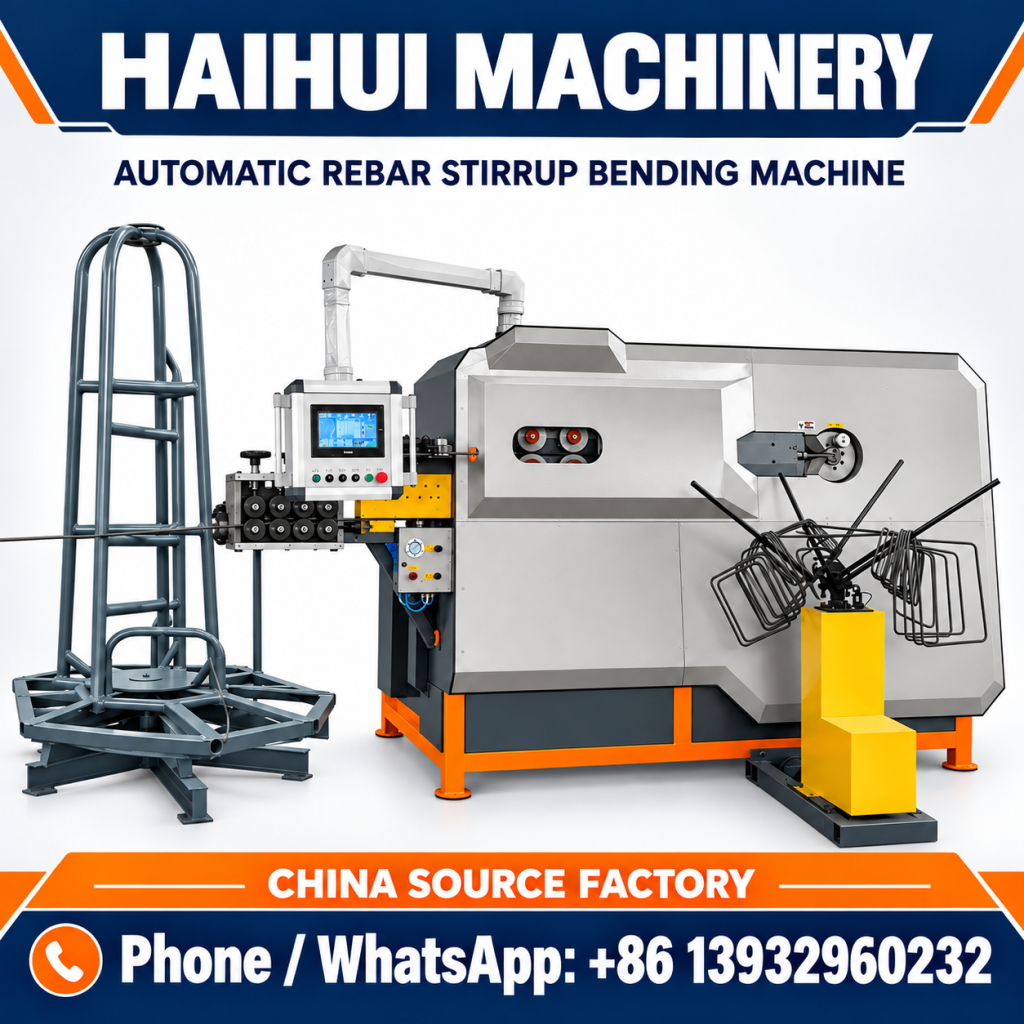
A rebar stirrup bending machine benefits from an inspection routine that follows the order, material and process changes. Consistent first-piece and batch checks help a workshop identify variation before a large quantity is mixed into finished stock.
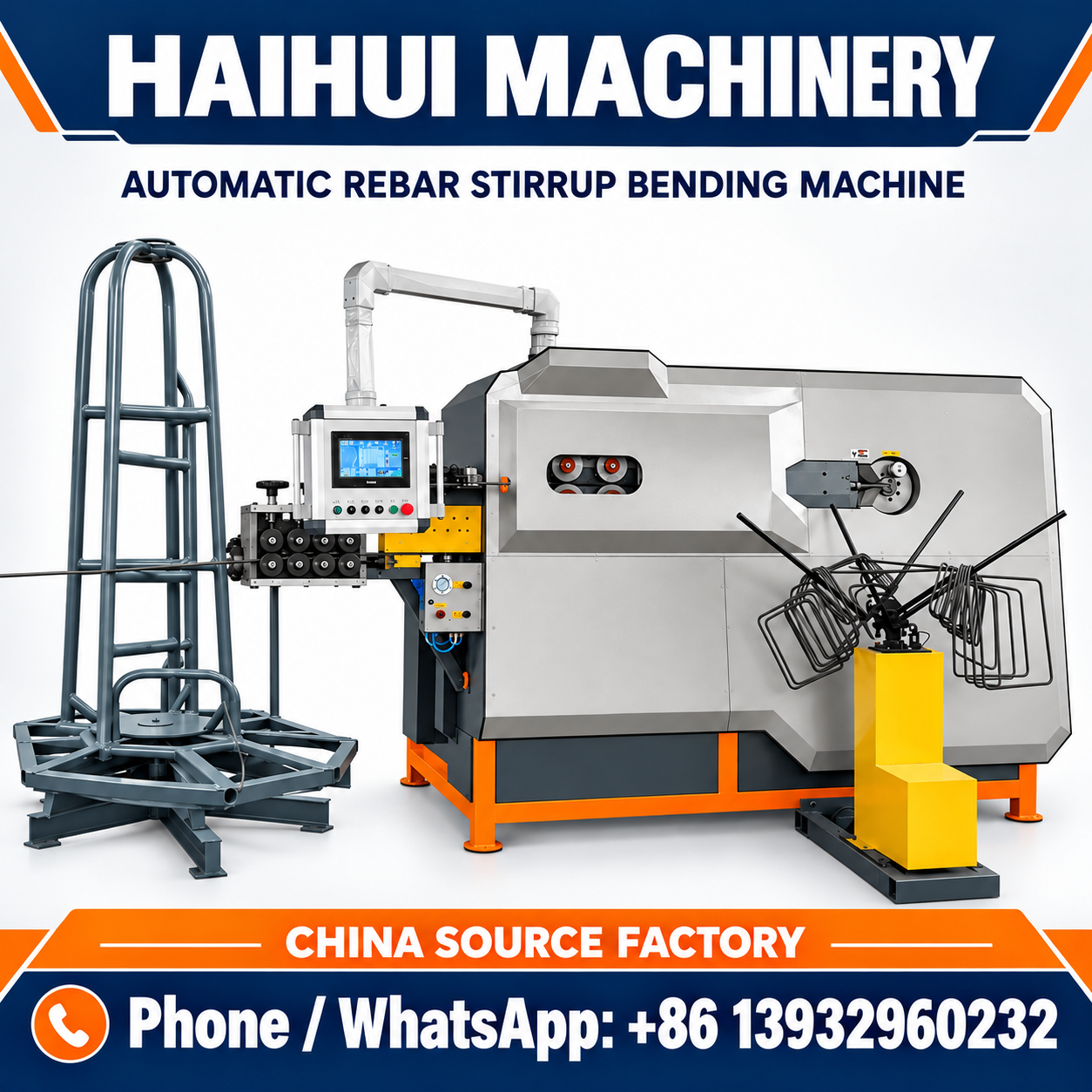
Haihui equipment photograph for reference. Confirm the model and supplied accessories for your application.
Connect inspection to the job
Keep the drawing revision, grade, diameter and quantity with the production order. Confirm dimensions before the first batch starts. When double-wire processing is used, cover both material streams instead of relying on a sample from only one side.
Recheck after relevant changes
Review first pieces after changing steel, tools or settings and after corrective maintenance. Use the same measurement references and support conditions. Keep results so that fixed offsets can be distinguished from random variation or collection damage.
Separate accepted and suspect parts
Identify batches and keep questioned material apart until it is assessed. Record what changed and when the variation was observed. This provides more useful information for the supplier than an isolated photograph without material or setup details.
FAQ: Who defines the final tolerance?
Use the applicable project requirements and the agreed technical acceptance conditions. A machine supplier can discuss capability but should not replace the responsible design or project specification. Contact Haihui with the relevant drawings and measurements.
Contact Haihui for a Drawing-Based Proposal
Xingtai Haihui Machine Tool Co., Ltd., Renze District, Xingtai, Hebei, China. For automatic rebar stirrup bending and integrated processing enquiries, send the steel grade, diameter, drawings and intended workload.
Phone: +86 13932960232 | WhatsApp Haihui.